Marvel Rivals map-locked hero picks versus free hero choice and which is better for learning the roster
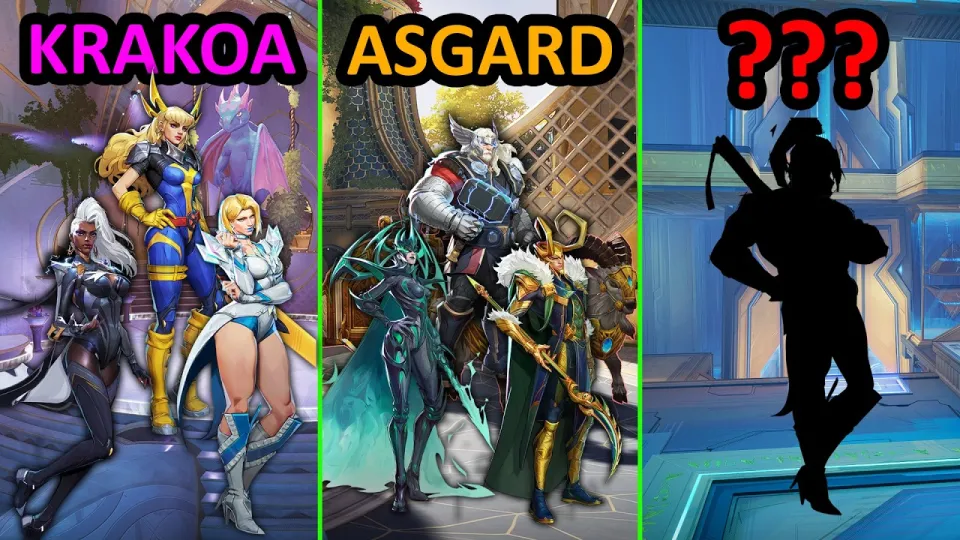
Video: The MAP Decides Our Heroes in Marvel Rivals
Want articles like this for your own video to promote it on YouTube and Google? Order them through the Telegram bot @sat_sit_bot. Articles with your video embedded are written and posted by the bot itself — on popular topical sites (no ads). Free trial — 50 articles.
· based on the channel Salty Phish
Key takeaways
- The challenge rule: every quickplay match locks the hero pool to whoever is lore-connected to the random map you queue into.
- Klyntar maps force Venom, Asgard maps open Thor, Loki and Hela, and Shin-Shibuya opens a 2099-flavored pool.
- Marvel Rivals launched with 33 heroes, so a map-locked rule is also a roster tour.
- Wakanda spaceport maps connect to the Guardians of the Galaxy through Rivals lore, not just Black Panther.
- Salty Phish runs the format on stream at http://www.twitch.tv/saltyphish/ and published the breakdown on the Salty Phish channel.
Marvel Rivals map-locked hero picks are the better training format than free hero choice, because the map decides your pool and you stop defaulting to the same two comfort picks every match. The rule is simple: queue into a random map, then only play heroes who are canonically tied to that location — Venom on Klyntar, Thor, Loki or Hela on Asgard, and so on. Salty Phish built a full video around exactly this constraint, and you can watch the same format live on Salty Phish's Twitch channel.
How the map-locked hero rule works in Marvel Rivals
The rule replaces personal preference with location lore as the only input for hero selection. Before the match starts you see the map, you name the legal pool out loud, and then you pick inside that pool — no exceptions for comfort, no switching to a main because the team is losing.
- Queue quickplay so the map is random and nobody can rig the draw.
- Identify the map's faction or setting: Klyntar, Asgard, Wakanda, Shin-Shibuya, Lower Manhattan, the Collector's museum.
- List every hero with a canonical link to that place.
- Pick only from that list, even if the role you get is not your usual one.
- Rotate to a new map and a new pool next match.
Marvel Rivals launched with 33 heroes, and the roster has only grown since, which means the rule almost never leaves you with a single option. Klyntar is the tightest case — Venom is the obvious lock — while Asgard hands you Thor, Loki and Hela in one go.
Why restriction beats free hero choice for learning the roster
Free hero choice produces repetition; a map-locked pool produces coverage. Most players settle into two or three heroes and never touch the rest, which is why they misjudge matchups and cooldowns on the heroes they never play.
- A locked pool forces you into roles you would otherwise avoid, so you learn what a tank actually needs from a healer.
- You feel ability timings from the inside instead of guessing them from the receiving end.
- You build a mental map of which heroes are strong on which geometry — chokes, high ground, open payload lanes.
- You stop blaming the pick and start solving the map.
The trade-off is real: some matches are simply harder because the lore-legal pool is weak on that layout. That is the point. You learn more from one uncomfortable match on an off-pick than from ten comfortable ones on your main.
Map-by-map hero pools and the lore arguments behind them
Every map in Marvel Rivals has a documented setting, and the community has spent a lot of energy arguing about who legally belongs on each one. The interesting part is that most disputes are settled by in-game detail rather than by comics knowledge.
- Klyntar: Venom is the anchor. Guardians of the Galaxy members are defensible here, since Rivals lore sends them from Wakanda to Klyntar on a mission tied to Knull and Bast.
- Asgard: Thor, Loki and Hela form the core pool, with room for other Asgardian-adjacent picks.
- Wakanda spaceport: Black Panther is the obvious pick, but the map's animations include the Milano leaving the port, which pulls the Guardians — and by extension Venom — into the legal list. Bucky Barnes also counts, because Rivals canon has the Wakandans build his arm.
- Shin-Shibuya: the 2099 setting opens Punisher and Captain America alongside the future-flavored picks, and the Stark-Fujikawa building on the map gives Iron Man a legitimate claim, reinforced by his own in-game dialogue.
- Lower Manhattan: Devil Dinosaur belongs here — Moon Girl's partner lives in New York in Marvel canon, so a giant dinosaur on a New York map is not a stretch.
- Collector's museum: Jeff, Psylocke and Mantis were imprisoned in the Collector's collection in the game's backstory, so all three are legal.
The pattern is that Rivals writes its lore into level geometry and voice lines. If you can point at something on the map, you can usually justify the pick.
Common disputes over which heroes count
The arguments are the most entertaining part of the format, and they follow a few predictable shapes. Purists want a named location or a direct story beat; loose interpreters accept any hero who has ever visited the place in any continuity.
A practical way to settle it mid-match:
- Prefer evidence visible on the map itself — signage, buildings, vehicles, background characters.
- Then prefer in-game voice interactions between heroes that reference the location.
- Then written Rivals backstory, such as prison records or mission briefings.
- Only then fall back on broader Marvel canon.
Under those tiers, most disputes collapse. The Stark-Fujikawa building settles Iron Man on Shin-Shibuya. The Milano settles the Guardians on the Wakanda port. The Collector's prison roster settles three heroes on the museum map at once.
What the format teaches about team composition
A map-locked pool quietly teaches composition theory, because you have to build a functional team out of whoever the location allows. On Asgard you may have three damage-leaning picks and one healer option; on Klyntar you may be short on ranged pressure entirely.
That forces the questions that matter in ranked: who initiates, who peels, who holds the choke, and which ultimate combos are actually available to you. Players who only ever play their main never have to answer those questions — they just execute the same plan on every map. The restriction makes composition a puzzle instead of a habit.
Where to watch the format and follow the creator
Salty Phish runs this kind of casual, rule-driven Marvel Rivals content regularly, and the video breakdown of the map-locked challenge is on the Salty Phish YouTube channel, with the raw matches streamed live first. The channel also runs a clips channel and a podcast if you want the commentary without the gameplay.
All the links from the video:
- http://www.twitch.tv/saltyphish/
- https://twitter.com/SaltyPhish
- https://www.tiktok.com/@saltyphish
- https://reddit.app.link/r_SaltyPhish
- https://www.instagram.com/saltyphish/
The verdict on map-locked hero picks
Map-locked hero picks are the better way to learn Marvel Rivals, because the constraint converts a random quickplay match into a specific lesson about a specific hero on a specific layout. Free hero choice is better only if your goal is to climb fast on a narrow pool you already know. The lore arguments are a bonus: they make you read the maps, and players who read maps win more fights than players who read patch notes. Watch the full run on the Salty Phish channel, then try the rule yourself — and if you want the live version, follow Salty Phish on Twitch and catch the next challenge as it happens.
Questions & answers
Does Iron Man count as a legal pick on the Shin-Shibuya map?
Yes, and there is in-map evidence for it. The Stark-Fujikawa building appears on the map, and Iron Man has dialogue that references the company. That makes him a defensible pick under the rule that visible map detail outranks general comics canon.
Should Guardians of the Galaxy heroes be allowed on Wakanda maps?
They can be, because Rivals lore has the Guardians working out of Wakanda before heading to Klyntar, and the Milano is visible leaving the Wakanda spaceport in map animations. Venom is a reasonable stretch addition for the same reason, since the mission concerns Knull and Bast.
Why does Devil Dinosaur belong on a New York map?
Devil Dinosaur lives in New York alongside Moon Girl in Marvel canon, so a giant dinosaur appearing on a Lower Manhattan map is consistent rather than random. That makes the pair legal picks for New York-set locations.
Which heroes are locked in on the Collector's museum map?
Jeff, Psylocke and Mantis all have Rivals backstory placing them in the Collector's collection, so all three qualify. It is one of the few maps where the lore gives you a ready-made list instead of a single obvious pick.
Source: The MAP Decides Our Heroes in Marvel Rivals · Markdown version